

Why the Current Education System Needs a Complete Upgrade ?
The current education system is outdated, exam driven, and disconnected from real world skills. Discover why education needs a complete upgrade to prepare students for modern careers, technology, and life challenges.
EDUCATION
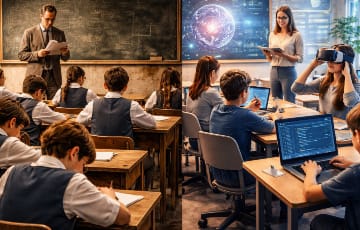
The education system was designed for a world that no longer exists. Most of its structure, rules, and teaching methods were created during an industrial era where the primary goal was to produce disciplined workers who could follow instructions, repeat tasks, and fit into predefined roles. Today’s world, however, demands creativity, adaptability, emotional intelligence, and continuous learning. Despite this massive shift, education systems in many countries still operate as if memorization and exam scores are the ultimate measures of intelligence. This growing mismatch between education and real-world needs is why a complete upgrade is no longer optional but necessary.
One of the biggest flaws in the current education system is its obsession with rote learning. Students are trained to memorize information, reproduce it in exams, and then forget it shortly after. This approach rewards short term memory rather than deep understanding. In real life, success rarely depends on recalling textbook definitions. It depends on problem solving, decision making, communication, and the ability to learn new skills quickly. When education focuses more on marks than meaning, students may pass exams but fail to develop the mindset required to handle real challenges.
Another major issue is the one size fits all model of learning. Every student is treated as if they learn at the same pace, in the same way, and have the same interests. In reality, human intelligence is diverse. Some people learn best through practical experience, others through discussion, observation, or experimentation. The current system often labels students as “weak” or “average” simply because they don’t fit into a narrow academic mold. Instead of nurturing individual strengths, the system pressures everyone to conform, which leads to frustration, low confidence, and wasted potential.
The curriculum itself is often outdated and disconnected from modern life. Many students spend years studying subjects without ever understanding how they apply to the real world. Financial literacy, mental health awareness, communication skills, and digital competence are either ignored or treated as optional, even though they are essential for adult life. At the same time, rapidly evolving fields like artificial intelligence, data analysis, and critical media literacy receive little attention. As a result, graduates often leave institutions unprepared for the realities of the job market and modern society.
The role of teachers is another area that needs serious reform. Teachers are frequently overburdened with administrative work, rigid syllabuses, and exam oriented targets. This leaves little room for creativity, mentorship, or meaningful interaction with students. Instead of being guides who inspire curiosity and independent thinking, teachers are forced to act as content deliverers. An upgraded education system would empower teachers with better training, flexibility, and respect, allowing them to focus on developing thinkers rather than test-takers.
Examination systems also play a critical role in holding education back. High stakes exams create extreme pressure and anxiety, making learning feel like a race rather than a journey. They often measure a student’s ability to perform under stress instead of their true understanding or long-term capabilities. This exam centric culture discourages experimentation and failure, even though failure is a natural and necessary part of learning. In the real world, progress comes from trial, error, and reflection, not from choosing the correct option in a multiple-choice test.
Technology, despite its potential, has not been integrated thoughtfully into education. In many cases, digital tools are used to replicate old teaching methods instead of transforming them. Simply replacing textbooks with tablets does not solve deeper structural problems. A true upgrade would use technology to personalize learning, encourage collaboration across borders, and provide access to high-quality education regardless of location or economic background. When used correctly, technology can shift education from passive consumption to active exploration.
Perhaps the most concerning outcome of the current system is its impact on mental health. Constant comparison, academic pressure, and fear of failure take a serious toll on students. Many grow up believing their self-worth is tied to grades or degrees. An upgraded education system would prioritize well-being alongside achievement, teaching students how to manage stress, build resilience, and develop a healthy relationship with learning. Education should empower individuals, not exhaust them.
Upgrading the education system does not mean abandoning structure or discipline. It means redefining the purpose of education itself. The goal should no longer be to produce obedient workers, but capable, curious, and compassionate human beings who can adapt to change. Learning should be lifelong, flexible, and deeply connected to real-world problems. When education evolves to meet the needs of modern society, it becomes a tool for personal growth, social progress, and meaningful innovation.
In a rapidly changing world, clinging to outdated educational models is one of the biggest risks a society can take. A complete upgrade is not just about better schools or smarter classrooms. It is about reshaping how we think about intelligence, success, and human potential. Only then can education truly prepare people not just to earn a living, but to live wisely and contribute meaningfully to the world.