

Why Many Indian Men Avoid Marriage Today ?
Why are Indian men stepping back from marriage? Explore the cultural, financial, emotional, and social reasons behind changing marriage dynamics in modern India.
CULTURE
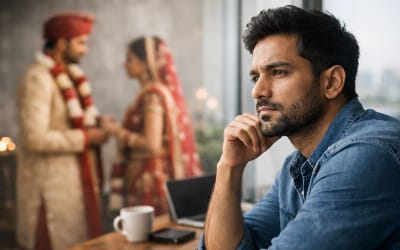
Marriage has always been one of the most important social institutions in India, deeply rooted in culture, tradition, and family values. For centuries, it was seen not merely as a union between two individuals but as a sacred bond that connected families, ensured lineage, and maintained social stability. Arranged marriages were the norm, where personal choice often took a backseat to family approval, social compatibility, and community expectations. Marriage symbolized responsibility, maturity, and social acceptance, and marrying at a young age was considered both desirable and necessary. However, as Indian society undergoes rapid transformation, the meaning and relevance of marriage are being questioned, particularly by younger generations of men who no longer view it as an unavoidable life milestone.
In recent years, there has been a noticeable shift in attitudes among Indian men toward marriage, especially in urban and semi-urban areas. Many men are choosing to delay marriage or avoid it altogether, prioritizing education, career growth, and personal development. The pressure to succeed professionally in a highly competitive environment has made marriage seem like an added responsibility rather than a supportive partnership. Unlike earlier generations, where stability came through marriage, today’s men often seek stability before marriage. As a result, the average age of marriage has increased, and the idea of marrying early has lost its social urgency. This change reflects a broader cultural shift where individual choice and personal fulfillment are increasingly valued over traditional expectations.
Globalization, exposure to diverse lifestyles, and easy access to information through technology have played a significant role in reshaping these perspectives. Indian men today are more aware of alternative ways of living and forming relationships, which has reduced the dominance of traditional marital norms. Live-in relationships, once considered taboo, are gradually gaining acceptance and are seen by many as a practical way to understand compatibility without the legal and social pressure of marriage. This evolving mindset emphasizes emotional connection, mutual respect, and personal growth over ritual and obligation, further reducing the perceived necessity of formal marriage.
Financial concerns also contribute heavily to the reluctance toward marriage. Despite increasing awareness and criticism, practices like dowry still exist in many parts of India, creating emotional and economic stress. Even beyond dowry, the cost of weddings has become overwhelmingly expensive, often involving large ceremonies, multiple events, and high social expectations. For many men, the idea of taking on such financial pressure in an uncertain economic climate feels risky. Rising living costs, job instability, and the desire to achieve financial independence push marriage further down the list of priorities, as men focus on securing their future before committing to long-term responsibilities.
At the same time, changing gender roles have added new layers of complexity to the institution of marriage. Traditional expectations of men as sole providers are now accompanied by the expectation that they be emotionally expressive, supportive partners who share domestic responsibilities. While these changes promote equality, they also create confusion and anxiety for many men who feel caught between traditional norms and modern ideals. The fear of failing to meet these evolving expectations can make marriage feel overwhelming rather than reassuring, leading to hesitation and delay.
Psychological factors such as fear of commitment also play a crucial role. Many men associate marriage with the loss of personal freedom, autonomy, and identity. Observing unhappy marriages, rising divorce rates, and constant societal pressure reinforces the belief that marriage can restrict individual growth. The modern dating culture, influenced heavily by dating apps and casual relationships, further normalizes non-committal connections. The ease of entering and exiting relationships reduces the motivation to formalize them, making marriage seem optional rather than essential.
Social media has intensified these feelings by creating unrealistic expectations around relationships and lifestyles. Constant exposure to curated images of success, romance, and happiness can lead to dissatisfaction with real-life relationships. Men may feel pressured to achieve a certain standard of life or partnership before considering marriage, which often feels unattainable. As a result, many prefer to wait, explore, or remain independent rather than commit to something that demands emotional, financial, and social investment.
Looking ahead, the future of marriage among Indian men appears to be evolving rather than disappearing. Marriage is increasingly being seen as a personal choice instead of a social obligation. Many men still value companionship, emotional connection, and long-term partnership, but they want these elements on their own terms, free from rigid traditions and unrealistic expectations. As society becomes more accepting of diverse life choices, marriage itself may transform into a more flexible and balanced institution, rooted in mutual understanding rather than pressure. Recognizing and respecting these changing attitudes is essential for redefining marriage in a way that aligns with the aspirations and realities of modern Indian men.