

Leadership Beyond Position: What Dr. A.P.J. Abdul Kalam and Sam Manekshaw Teach Us
A powerful leadership lesson from Dr. A.P.J. Abdul Kalam and Field Marshal Sam Manekshaw that shows leadership is built on character, humility, and principles not position or authority.
Leadership is often misunderstood as authority, rank, or public visibility. In reality, the most powerful lessons of leadership are often revealed in moments of silence, humility, and moral clarity. One such moment comes from a quiet encounter between two of India’s greatest icons Dr. A.P.J. Abdul Kalam and Field Marshal Sam Manekshaw.
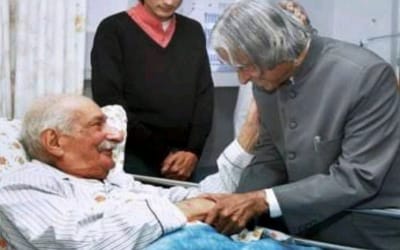
In the serene hill town of Coonoor, Dr. Kalam once visited a military hospital. There were no cameras, no official announcements, and no protocol-driven formalities. He did not enter as the President of India asserting his position, but as a human being guided by respect and purpose. His visit was personal, not ceremonial.
Inside the hospital room lay Field Marshal Sam Manekshaw, fondly remembered as Sam Bahadur. Age had weakened his body, but not his spirit. This was the man whose leadership had shaped a nation’s destiny during one of its most defining wars. When Dr. Kalam gently asked whether he was comfortable and if there was anything he could do for him, the question carried genuine concern rather than authority.
Sam Manekshaw smiled and replied that he had one complaint. As Dr. Kalam leaned closer, expecting a concern, Sam said with quiet dignity that the most respected President of the country was standing before him, and he could not rise to salute him. The room fell silent not with sadness, but with profound mutual respect. In that moment, titles dissolved. What remained was character. Dr. Kalam simply held his hand. No words were necessary.
During their conversation, Sam Manekshaw mentioned, almost in passing, that the pension arrears associated with the Field Marshal rank had been pending for years. There was no demand, no frustration, and no expectation. It was merely a statement of fact. Dr. Kalam listened attentively. He did not make promises or public declarations. He absorbed the issue and moved on quietly.
Within a week, the Defence Secretary personally arrived with a cheque worth nearly ₹1.3 crore, resolving the long-standing matter. There was no publicity, no claim of credit, and no celebration. It was leadership expressed through action rather than words.
What followed elevated the story even further. Field Marshal Sam Manekshaw donated the entire amount to the Army Relief Fund. Even in his final years, he chose to give back to the institution that had defined his life. There was no announcement, no desire for recognition only integrity.
This story endures because it reflects values that are increasingly rare. It reminds us that respect cannot be commanded through position alone; it is earned through conduct. True leadership is not about asserting power but about listening with sincerity and acting with integrity. The greatest leaders do not seek applause; they serve quietly and leave behind institutions stronger than themselves.
In a world obsessed with titles, visibility, and influence, this moment between Dr. Kalam and Sam Manekshaw offers a timeless reminder. Leadership is not defined by the chair one occupies, but by the principles one lives by. When authority is guided by humility and power is balanced with compassion, leadership transcends position and becomes legacy.
If we choose to carry even a fraction of these values into our daily lives, leadership will stop being about control and start becoming about service. And that is where meaningful change truly begins.