

Clean India Is Not a Budget Problem. It’s a Behaviour Problem.
India’s cleanliness problem isn’t about money or government schemes. It’s about civic sense, personal responsibility, and how citizens treat public spaces.
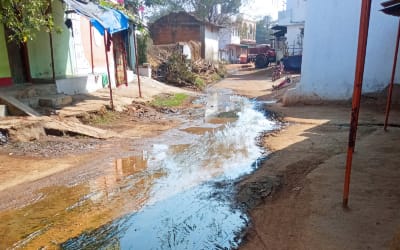
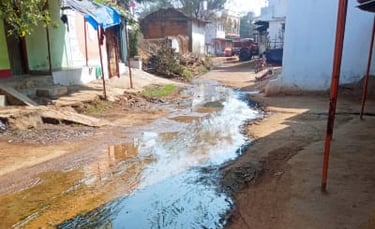
India does not have a cleanliness problem. India has a behaviour problem.
This statement makes many people uncomfortable because it removes the convenience of blaming the government alone. It forces us to confront something far more difficult: ourselves. For decades, the national conversation around cleanliness has revolved around budgets, policies, schemes, trucks, contracts, and campaigns. We argue about how many bins exist, how often garbage is collected, how much money is allocated, and which department failed. Yet the streets remain dirty, rivers remain choked, public walls remain scarred, and public spaces remain treated like nobody’s responsibility.
The truth is painfully simple. Cleanliness is not missing because of a lack of money. It is missing because of a lack of respect.
Across Indian cities, strict anti-littering enforcement at the city level is often discussed as a solution, but enforcement only works when citizens believe the rule is morally correct, not just legally enforceable. In countries we admire for cleanliness, laws exist, yes, but more importantly, social shame exists. Throwing garbage on the street is not merely illegal there; it is embarrassing. It signals poor upbringing, lack of civic values, and disrespect for others. In India, the opposite often happens. People litter casually, confidently, even defiantly, as if public space is a dumping ground that magically cleans itself.
The presence of proper bin infrastructure in all commercial zones is necessary, but infrastructure alone does not create discipline. You can place bins every ten meters, yet people will still throw waste from moving vehicles, drop cups beside bins, or dump plastic into drains. This happens because the mental relationship with public space is broken. Many Indians treat public areas as no-man’s land, spaces that belong to nobody and therefore deserve no care. The moment a place is not privately owned, it becomes disposable.
This mindset is rooted deep in how civic sense is understood in India. Civic sense is often seen as a government feature, something delivered through policies and programs. In reality, civic sense is a citizen upgrade. It is a software update that happens internally, not something that can be installed externally. Governments can enable, but they cannot substitute individual responsibility. Clean cities are not created by perfect systems alone; they are sustained by millions of small, disciplined daily decisions made by ordinary people.
Education plays a critical role here, but not the kind limited to slogans and annual cleanliness drives. Civic sense education must begin at school and continue beyond textbooks. Children should grow up understanding that public property is not government property, it is shared property. A broken bench, a dirty classroom, a littered playground are not someone else’s fault; they reflect collective neglect. When children are taught early that cleanliness is linked to dignity, not fear of punishment, they grow into adults who clean because it feels right, not because someone is watching.
Unfortunately, much of India’s education system treats civic responsibility as an optional chapter rather than a core value. Students memorize lessons on cleanliness without practicing them. Schools conduct symbolic clean-up days while allowing daily indiscipline. Children watch adults litter outside school gates while being told inside classrooms to respect cleanliness. This contradiction silently teaches them that rules are performative, not real.
Public accountability for irresponsible behaviour remains weak, not because laws don’t exist, but because social pressure doesn’t. When someone throws garbage out of a car window, most people look away. When someone urinates in public, others avert their eyes. When shops dump waste on roads, passersby accept it as normal. Silence becomes complicity. A society that refuses to correct itself cannot be corrected by authorities alone.
In cleaner nations, citizens actively protect public spaces. People confront wrongdoers politely but firmly. They report violations not out of hostility, but out of shared ownership. This culture of accountability is not aggressive; it is normalized. India lacks this normalization. Here, correcting someone is often seen as interference or arrogance. We fear conflict more than we fear decay.
Corporate responsibility for plastic neutrality is another missing piece that cannot be ignored. Companies profit from selling convenience wrapped in plastic while distancing themselves from the waste they generate. The streets carry the burden of corporate packaging, but accountability stops at the checkout counter. True responsibility would mean taking ownership of the entire lifecycle of products, including waste recovery and recycling. However, even corporate accountability cannot compensate for careless consumption. Plastic becomes a problem only when citizens treat disposal casually.
Urban design has the power to shape behaviour, but only when paired with discipline. Cities can be designed so that proper disposal becomes the easiest choice, not an afterthought. Well-placed bins, visible signage, clean public toilets, and efficient waste segregation systems matter. But design cannot fix apathy. If citizens actively try to escape responsibility, no design will stop them. The goal of urban planning should be to make cleanliness intuitive, not optional.
The uncomfortable truth is that India does not lack awareness. It lacks consistency. People want clean neighborhoods but don’t want to change habits. They demand spotless tourist destinations but litter during visits. They complain about dirty trains while throwing waste out of windows. This contradiction survives because responsibility is always outsourced. Someone else will clean it. Someone else is paid for it. Someone else will fix it.
This mindset is colonial in nature, inherited from a time when public spaces belonged to rulers, not citizens. Unfortunately, independence did not fully dismantle this psychology. Many Indians still treat public property as alien, temporary, or unworthy of care. Private homes are kept spotless while doorsteps are neglected. This sharp boundary between private pride and public indifference reveals where responsibility ends.
The countries we admire are clean not because they have more money, but because their people have more respect for public spaces. Japan did not become clean by hiring armies of cleaners alone. It became clean because citizens clean after themselves. Singapore did not eliminate litter through kindness; it did so by aligning strict enforcement with social expectations. European cities did not maintain beauty by accident; they built cultures where disorder is socially unacceptable.
India often responds by saying, “We are too populous.” This is a convenient excuse. Population does not create filth; indiscipline does. High population density demands higher civic responsibility, not lower. In fact, the more crowded a country is, the more disciplined its citizens must be for systems to work. Disorder scales faster than order.
The quote, “A nation’s cleanliness is not built by budgets, but by behaviour,” captures this reality perfectly. Budgets can buy machines, manpower, and infrastructure. Behaviour determines whether those investments succeed or fail. You can clean a street every morning, but if citizens litter by afternoon, the system collapses. No budget can keep pace with irresponsible habits repeated by millions.
The obsession with government spending also distracts from the fact that many cleanliness improvements require zero rupees. Not throwing garbage costs nothing. Using a bin costs nothing. Waiting to dispose of waste properly costs nothing. Teaching children by example costs nothing. Speaking up politely when someone litters costs nothing. Respect is free, yet it is the rarest resource in public spaces.
The moment we stop outsourcing responsibility, India will begin to look very different without spending a single extra rupee. This is not an exaggeration. If every citizen took ownership of just the space they occupy, the impact would be immediate and visible. Streets would remain cleaner longer. Drains would clog less. Public transport would feel more dignified. Cities would breathe easier.
This does not mean the government has no role. Enforcement matters. Infrastructure matters. Policy matters. But these are multipliers, not foundations. Without civic sense, enforcement becomes oppressive and infrastructure becomes abused. With civic sense, even imperfect systems function better.
Civic sense is not about perfection. It is about intention. It is about asking, “Will my action inconvenience someone else?” It is about recognizing that public space is shared space. It is about understanding that cleanliness reflects respect for strangers, not fear of fines.
India is at a crossroads where it must decide whether cleanliness is a cosmetic goal or a cultural value. Campaigns can raise awareness, but culture sustains change. Culture is built daily, quietly, through repetition. It grows when parents correct children gently, when adults model discipline unconsciously, when communities take pride in shared spaces.
The transformation will not come overnight. It will not come from slogans alone. It will come when throwing garbage feels wrong even when no one is watching. When littering feels shameful not because of punishment, but because it violates an internal standard. When cleanliness becomes identity, not instruction.
Civic sense is not inherited automatically. It must be practiced until it becomes instinct. India does not need more speeches about cleanliness. It needs quieter revolutions in daily behaviour. It needs citizens who stop asking, “Who will clean this?” and start saying, “Why should I dirty this?”
Only then will India begin to look different. Not because of new budgets. Not because of new schemes. But because millions of small, responsible decisions finally align with a shared respect for public life.